

In the wake of large-scale initiatives like the Makan Bergizi Gratis (MBG) program, the pressure on kitchen infrastructure has never been higher. Commercial cold food storage is not just a regulatory requirement—it is a critical control point. Proper refrigeration protects food quality, prevents bacterial growth, and safeguards your brand reputation.
In high-volume environments where doors are opened frequently, maintaining stable temperatures is essential for operational safety. This is where industrial-grade equipment, like that from Solex, becomes the backbone of your kitchen.
Critical Temperature Standards
To ensure food safety compliance and maintain the nutritional integrity (gizi) of every meal, your cooling units must hit specific targets:
- Refrigerator: 4°C or below
- Freezer: -18°C or below
These temperatures keep food out of the “danger zone” (5°C–60°C), where bacteria multiply rapidly. Solex units are specifically engineered for quick temperature recovery, ensuring that even in the heat of a busy lunch service, your ingredients remain safe.
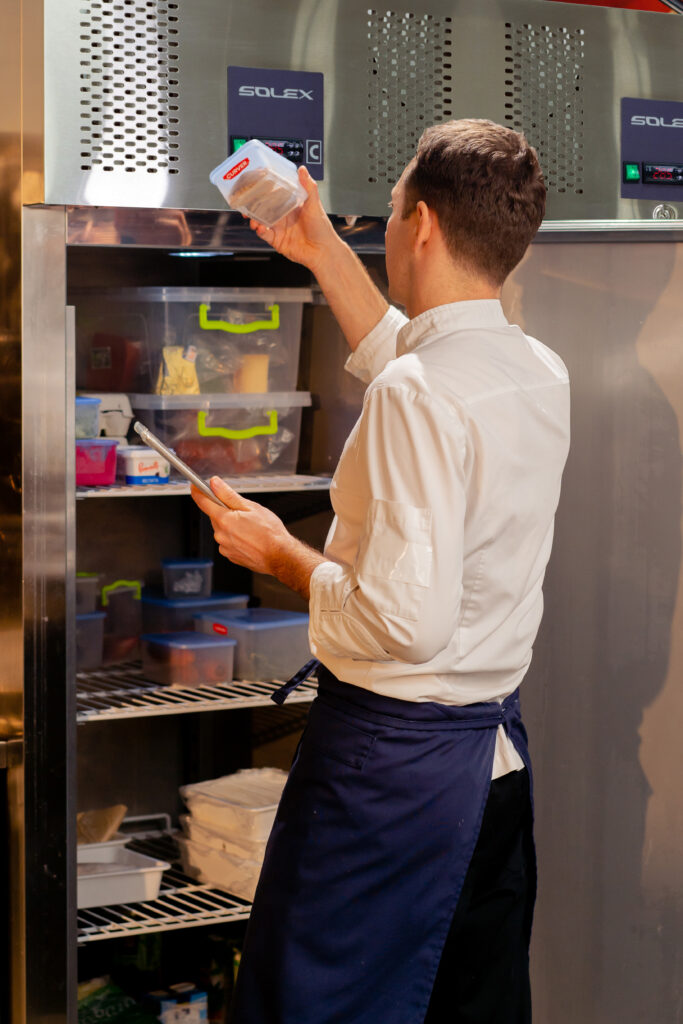
The Professional Storage Hierarchy
Proper vertical organization is the secret to minimizing cross-contamination. Following this structure is essential for HACCP compliance:
1. Top Shelf: Ready-to-Eat Foods
Keep cooked meats, prepared dishes, and deli items here. Since these won’t be cooked further, they must stay at the highest point to avoid drips.
2. Second Shelf: Raw Seafood
Place whole cuts of fish and shellfish here. These require slightly lower temperatures than prepared foods but carry less risk than poultry.
3. Third Shelf: Raw Whole Meat
This level is for whole cuts of beef, pork, and lamb, as well as eggs intended for immediate service.
4. Fourth Shelf: Ground & Processed Meats
Ground beef and marinated meats should be kept lower, as they have a higher surface area for potential bacterial growth.
5. Bottom Shelf: Poultry
Chicken and turkey must always stay at the bottom. Poultry carries the highest bacterial risk; keeping it at the lowest level prevents raw juices from contaminating other ingredients.
Why Solex is the Choice for MBG Programs
As Indonesia’s premier home-grown refrigeration brand, Solex is uniquely positioned to support the Makan Bergizi Gratis program. Our equipment offers:
- Industrial Durability: Designed to handle the “heavy lifting” of large-scale catering.
- Precision Cooling: Ensuring the gizi (nutritional value) of food is preserved from farm to table.
- Local Support: Faster service and parts availability to ensure your kitchen never stops running.
Investing in the right commercial cold food storage is an investment in the health of the next generation.
Operational Best Practices
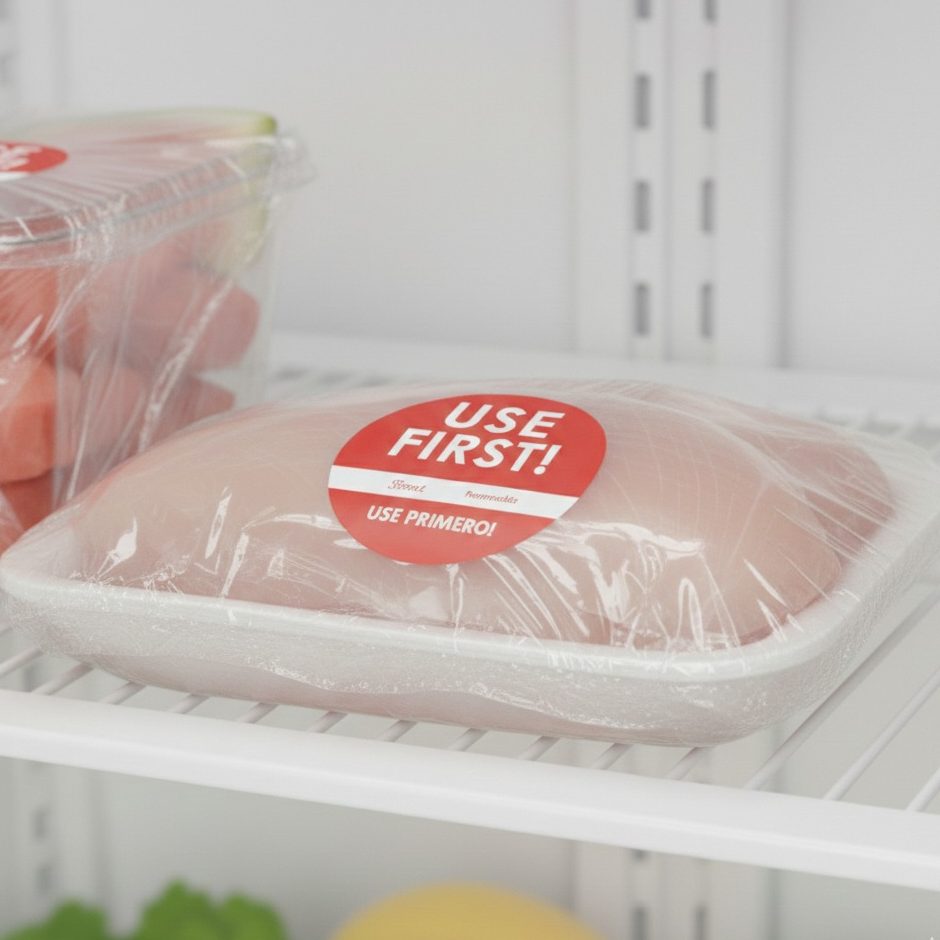
1. Label Everything
Use clear date labels for preparation and storage dates. This supports traceability and inventory control.
2. Apply FIFO (First In, First Out)
Rotate stock so older items are used first. This reduces waste and ensures freshness.
3. Use Color-Coded Containers
Separate protein categories and ready-to-eat items to reduce handling errors.
4. Clean Refrigeration Systems Regularly
Perform deep cleaning every 3–4 months. Clean interior surfaces, condenser coils, and check door gaskets to maintain efficiency and temperature consistency.
Cold Food Storage Chart (°C Reference)
| Food Item | Refrigerator (≤4°C) | Freezer (≤-18°C) |
| Bacon | 1 week | 1 month |
| Hard Cheese | 3–4 weeks | 6 months |
| Soft Cheese | 1 week | 6 months |
| Cooked Salads (chicken, tuna, etc.) | 3–4 days | Do not freeze |
| Fresh Eggs (shell) | 3–5 weeks | Do not freeze |
| Fatty Fish (salmon) | 1–3 days | 2–3 months |
| Lean Fish (cod) | 1–3 days | 6 months |
| Ground Meat (raw) | 1–2 days | 3–4 months |
| Poultry (fresh) | 1–2 days | 6 months |
| Cooked Poultry | 3–4 days | 2–6 months |
| Milk | 1 week | 3 months |
| Soups & Stews | 3–4 days | 2–6 months |
| Steaks & Roasts (raw) | 3–5 days | 4–12 months |
Why Commercial Refrigeration Matters
In high-demand kitchens, temperature recovery speed, air circulation, insulation thickness, and door sealing integrity significantly impact food safety. Professional refrigeration systems are engineered for:
- Faster temperature pull-down
- Stable internal climate
- High door-opening frequency
- Long-term durability
Choosing the right commercial refrigeration solution ensures consistent compliance, minimizes food waste, and protects your business reputation.
Because in professional kitchens, food safety is not optional — it is operational discipline.
