Chest Freezer VS Commercial Refrigerator: How The Choice of Cooling Units May Impacts Food Safety in Commercial Kitchens
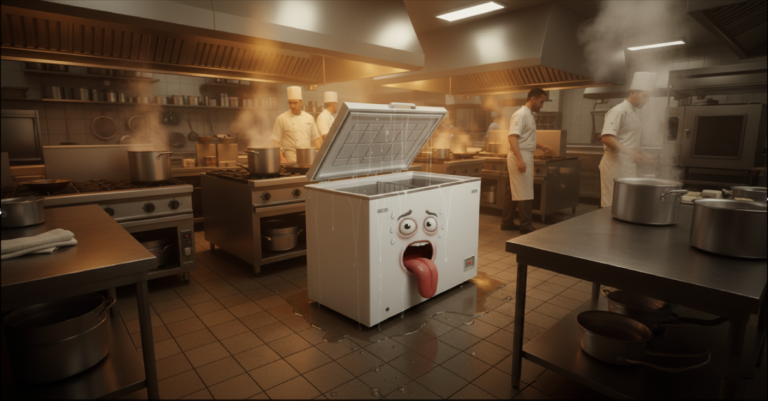
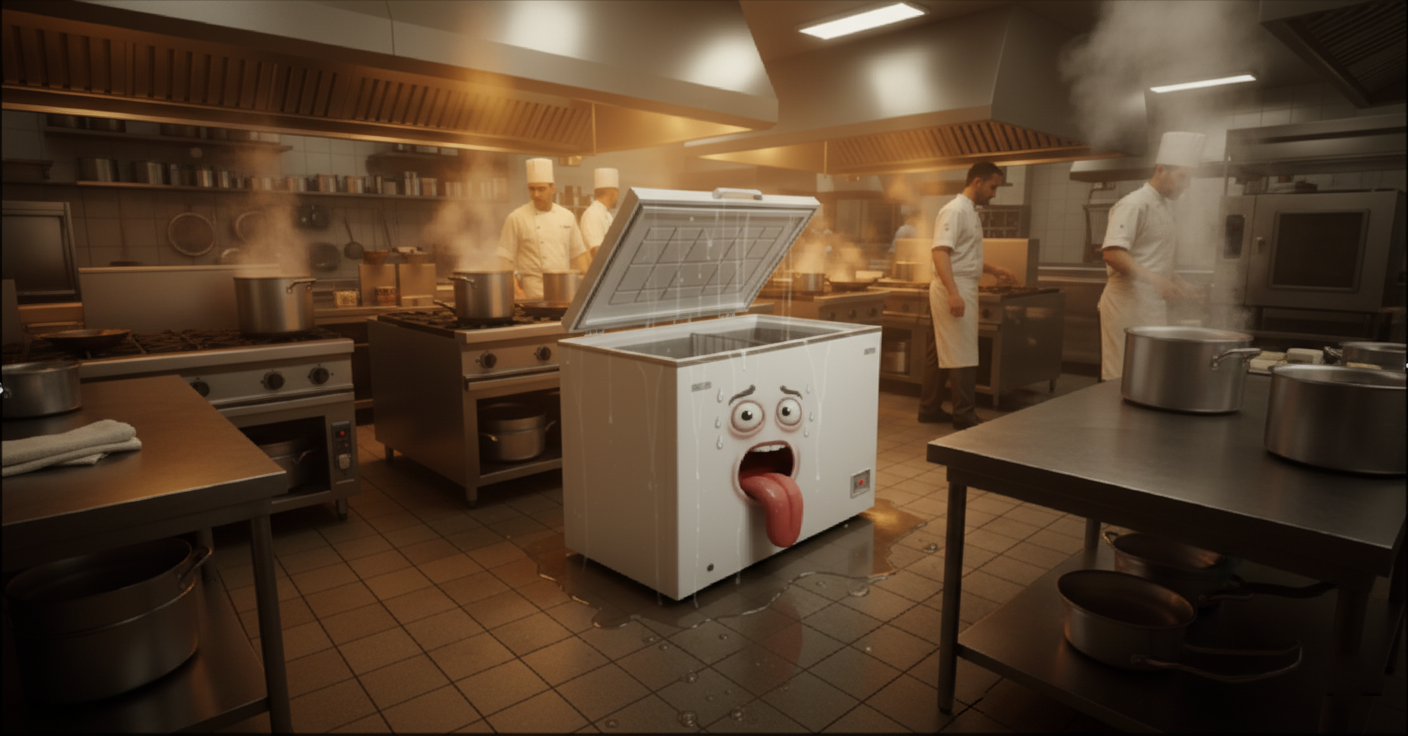
In the commercial refrigerator vs chest freezer debate, many small and medium-sized foodservice businesses are drawn to chest freezers as a convenient and affordable solution for keeping food cold. However, what works for household use is often unsuitable for a busy commercial kitchen, where food safety, temperature consistency, and workflow efficiency are critical. As demand for faster service increases, relying on static cooling units, such as chest freezers, can expose businesses to unnecessary risks. The difference lies in the cooling system design, nd that difference can determine whether your kitchen struggles with food spoilage.
The Limitations of Chest Freezers
Chest freezers use a static cooling system, which relies on natural air convection rather than active airflow. This design creates uneven temperature zones, as cold air naturally settles at the bottom. The fundamental difference here, which is often the central issue in a commercial refrigerator vs chest freezer debate, is that the freezer’s design struggles to cope when opened frequently in a commercial setting, leading to significant fluctuations in internal temperature.
This leads to partial thawing, potential bacterial growth, and a loss of product freshness. Over time, these inconsistencies lead to increased food waste and compromise compliance with national food safety standards, such as those established by Indonesia’s Badan Pengawas Obat dan Makanan (BPOM).
The FIFO Challenge: A Hidden Risk in Chest Freezers
Another major drawback of chest freezers is their poor accessibility. Because all products are stacked, it becomes challenging to apply the First In, First Out (FIFO) principle, a fundamental food safety practice.
In busy operations, staff often end up taking products from the top layer, leaving older stock buried and forgotten at the bottom. This is a serious inventory management issue that leads to expired products and financial losses. This factor is a critical point of comparison when evaluating a commercial refrigerator vs chest freezer.
The Advantage of Active Cooling
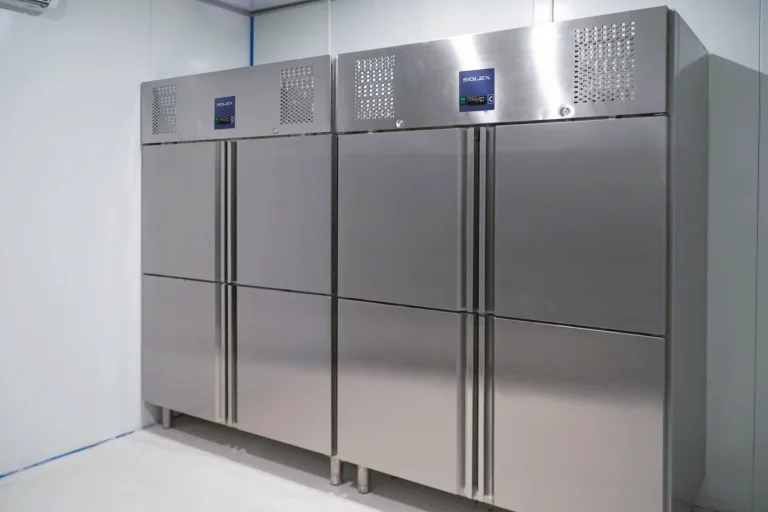
Active-cooled commercial refrigerators and freezers are designed specifically for professional environments. Beyond just having a bigger cooling capacity, their fan-assisted cooling system maintains even temperature distribution across all storage levels.
This system also enables faster temperature recovery after each door opening. Combined with upright cabinet or counter configurations, they promote better organization and FIFO implementation, making food rotation safer and easier.
Building a Reliable Cold Chain
The choice between a commercial refrigerator and a chest freezer is more than just about cooling. It’s about protecting your products, customers, and reputation.
Every upright cabinet and counter refrigerator in Solex is engineered with active cooling technology. Our units deliver stable performance, reliable temperature control, and professional-grade efficiency, ensuring your kitchen stays productive, compliant, and food-safe every day.
🧊 Chest Freezer vs. Active-Cooling Commercial Refrigerator
| Aspect | Chest Freezer (Static Cooling) | Active-Cooling Refrigerator (Fan-Assisted) |
| Cooling System | Static / Natural convection, cold air settles at the bottom | Forced Fan Cooling, continuous, uniform cold air circulation |
| Temperature Consistency | Uneven; top warmer, bottom colder | Even and stable throughout all shelves |
| Recovery After Door Opening | Fast, airflow quickly restores the target temperature | Maintains a constant safe temperature zone (below 5°C or -18°C) |
| Food Safety Risk | Higher risk of partial thawing and bacterial growth | Maintains a constant safe temperature zone (below 5°C or -18°C) |
| FIFO (First In, First Out) Management | Difficult, products stacked; older stock often buried and forgotten | Easy, shelf layout allows quick access and stock rotation |
| Operational Efficiency | Slower; requires frequent manual reorganization | Faster access; improved workflow and safety compliance |
| Best Suited For | Long-term frozen storage with minimal access | Active daily kitchen operations with frequent access |
Untuk Versi Bahasa Indonesia dari artikel ini, silakan klik di sini