
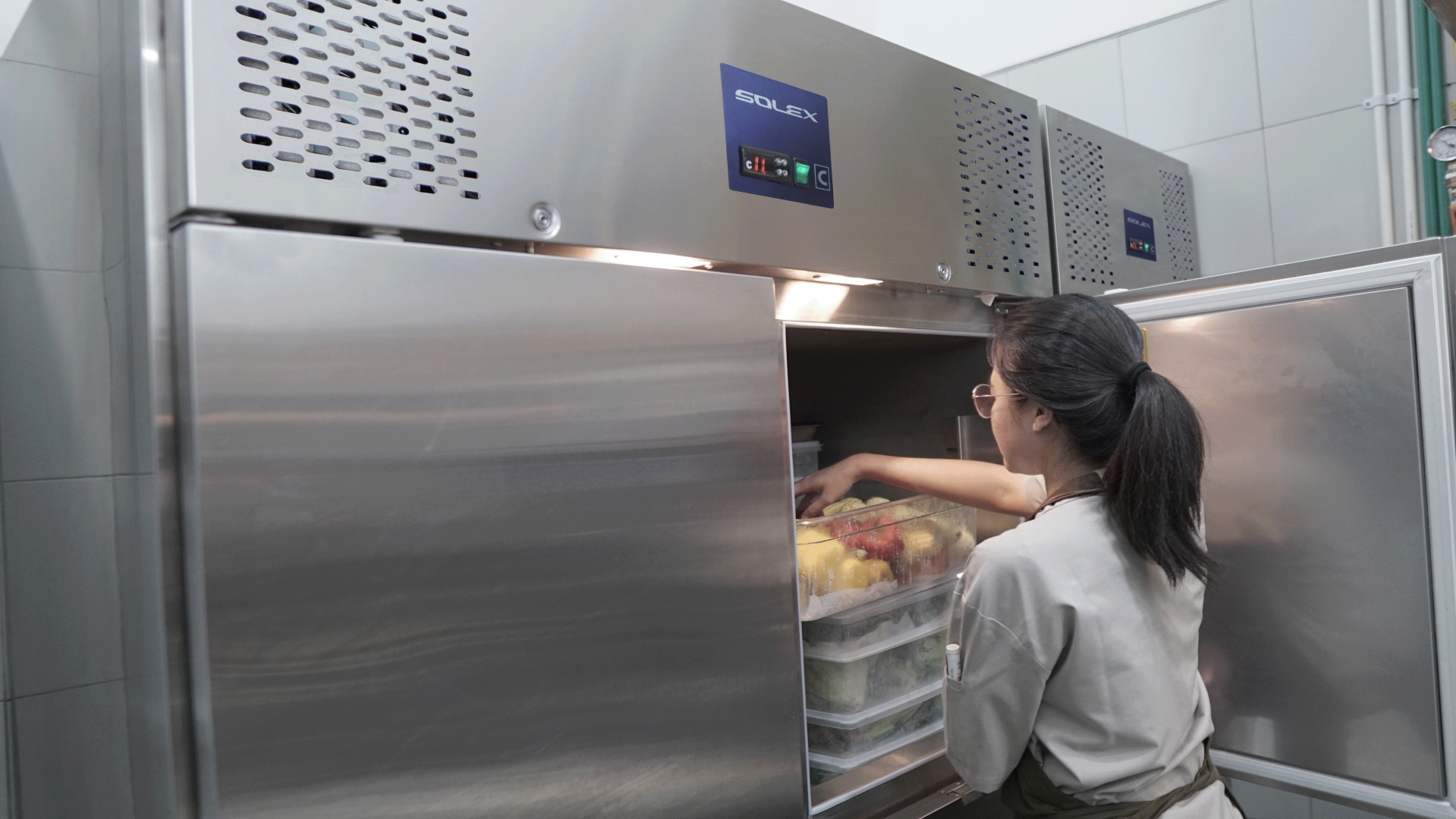
In professional kitchens, inventory control is just as important as cooking skill. One of the most essential systems used in foodservice operations worldwide is FIFO, First In, First Out.
FIFO means that the first product stored should be the first product used. Ingredients that arrive earlier must be used before newer stock. While the concept is simple, maintaining FIFO discipline requires the right workflow and proper storage equipment.
Without the right storage system, even the best inventory practices can fail.
What Is FIFO and Why It Matters
FIFO is a fundamental inventory management principle used across restaurants, hotels, catering kitchens, and food production facilities. The goal is to ensure that food products are rotated properly so older stock does not remain unused while newer items are consumed first.
This practice plays a critical role in reducing food waste. Studies show that commercial kitchens waste between 4% and 10% of the food they purchase before it even reaches the customer.
Additionally, poor inventory management alone can account for around 12% of avoidable food waste in high-volume kitchens.
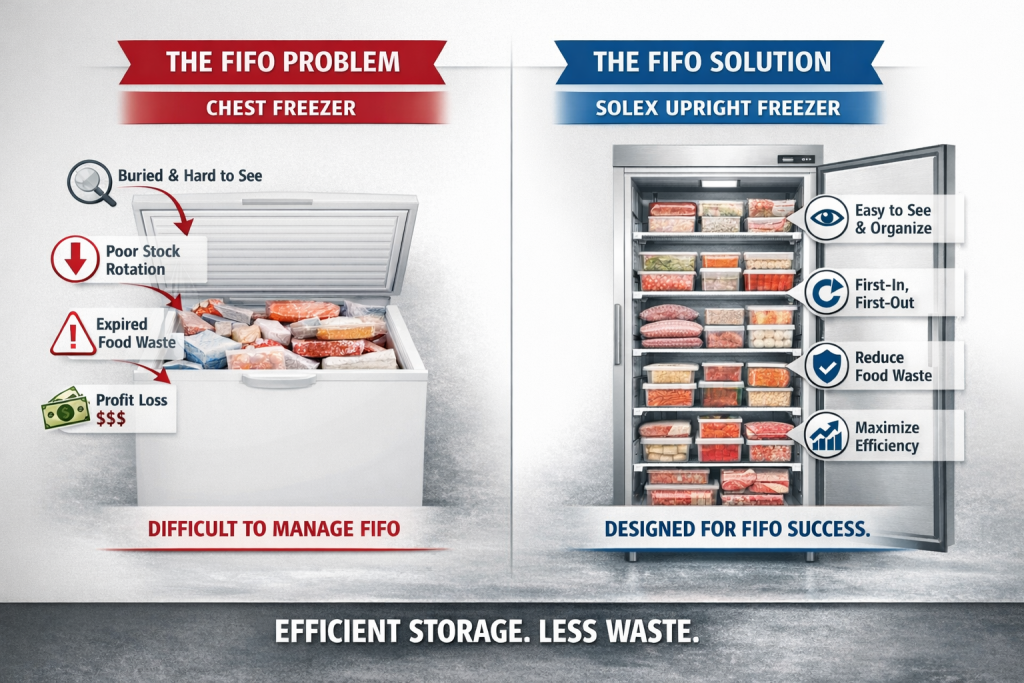
When practiced consistently, FIFO helps kitchens:
• Maintain food freshness and quality
• Reduce spoilage and expired products
• Improve food safety compliance
• Simplify inventory monitoring
• Lower operational costs
In high-volume kitchens, this system directly impacts profitability.
A Simple Example in Daily Kitchen Operations
Imagine a restaurant receiving frozen chicken deliveries twice a week.
If kitchen staff place the new cartons on top of older stock without proper organization, the older products may remain buried at the bottom of storage. Over time, these items risk exceeding their recommended storage period.
Eventually, the kitchen may discover expired products that must be discarded. This is a common scenario in kitchens where ingredients are stacked deep inside storage units.
In fact, expired or spoiled inventory represents around 10–15% of food discarded in restaurant storage areas, often due to poor stock rotation practices.
Why Chest Freezers Make FIFO Difficult
Many smaller kitchens initially rely on household-style chest freezers because of their lower purchase cost. However, these units are not designed for professional kitchen inventory management.
Products are typically stacked vertically and buried under layers of stock, making it difficult to access older items without removing multiple boxes.
This creates several operational problems:
- Poor product visibility
- Slower stock rotation
- Higher risk of forgotten inventory
- Increased food waste
In busy kitchens, staff often grab the most accessible product rather than searching for the oldest one, making FIFO nearly impossible to maintain.
Household Chest Freezer vs Commercial Upright Freezer
| Feature | Household Chest Freezer | Solex Upright Cabinet Freezer |
| Product Visibility | Low – items buried in stacks | High – organized shelf layout |
| FIFO Implementation | Difficult | Easy to maintain |
| Inventory Access | Requires removing multiple layers | Direct shelf access |
| Workflow Efficiency | Slower product retrieval | Faster kitchen workflow |
| Food Waste Risk | Higher | Lower due to proper rotation |
| Professional Suitability | Limited | Designed for commercial use |
The Financial Impact of Poor FIFO
Food waste is one of the most overlooked costs in foodservice operations.
Industry data suggests as much as 25% of food entering restaurant kitchens can eventually become waste when inventory, preparation, and storage are poorly managed.
Even small improvements in inventory rotation can have a significant impact on profit margins. Restaurants that actively monitor and manage food waste have been shown to reduce waste-related costs by around 15% within the first year.
Supporting Better Kitchen Operations
Solex commercial upright freezers are designed to support efficient kitchen workflows and proper stock rotation.
With organized shelving, clear product visibility, and consistent temperature performance, Solex helps kitchen teams maintain FIFO discipline while protecting food quality and reducing waste.
Because in professional foodservice operations, efficiency begins with the right equipment.
Solex. Serious Refrigeration for Serious Investment.
